I got a shiny lil playdate back in 2024. It’s a cute yellow handheld gaming console with a crank on the side. Made by Panic and Teenage Engineering, it comes with 16 MB of RAM (yes, mb not gb!) Here’s me playing root bear on it.
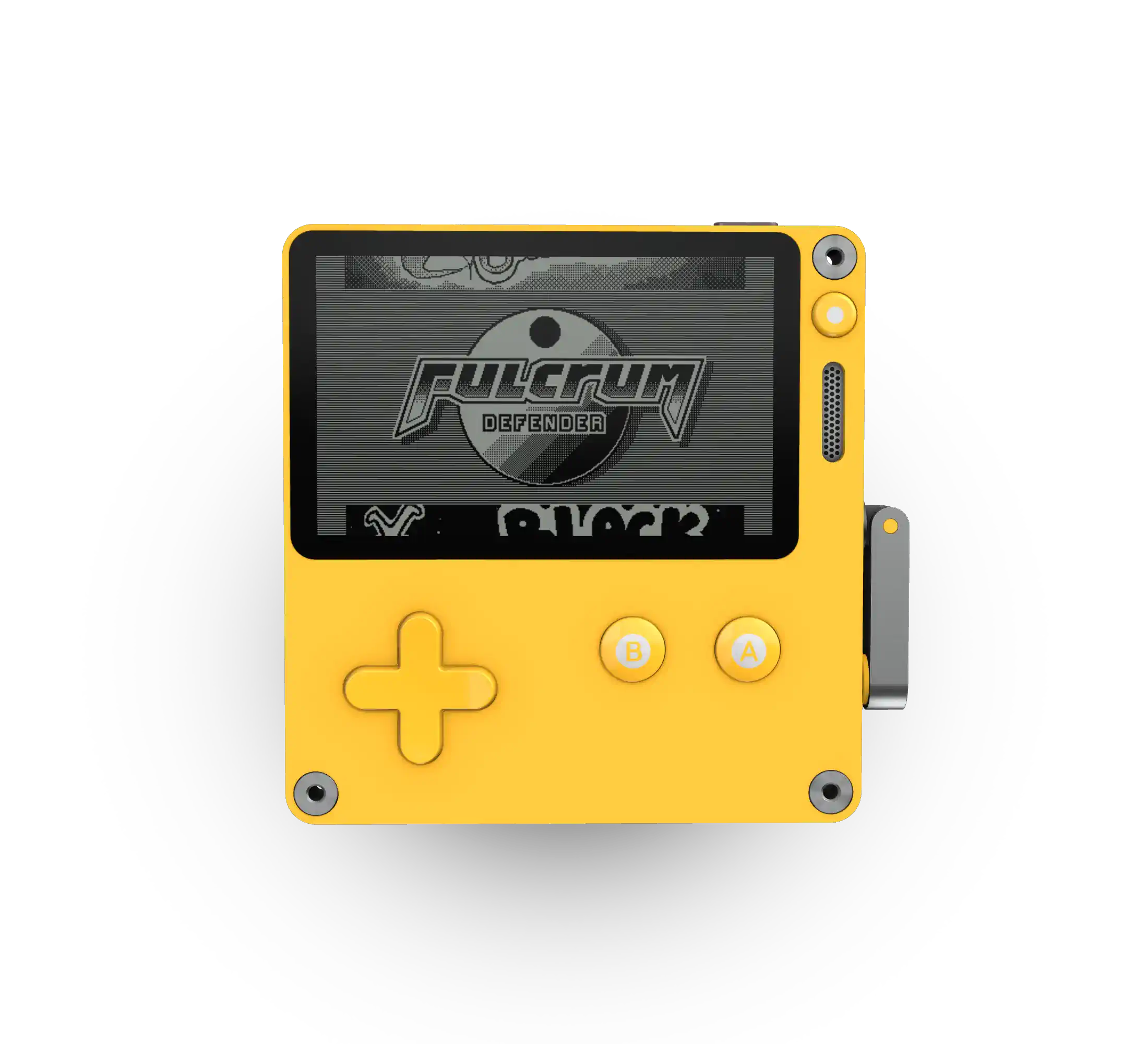
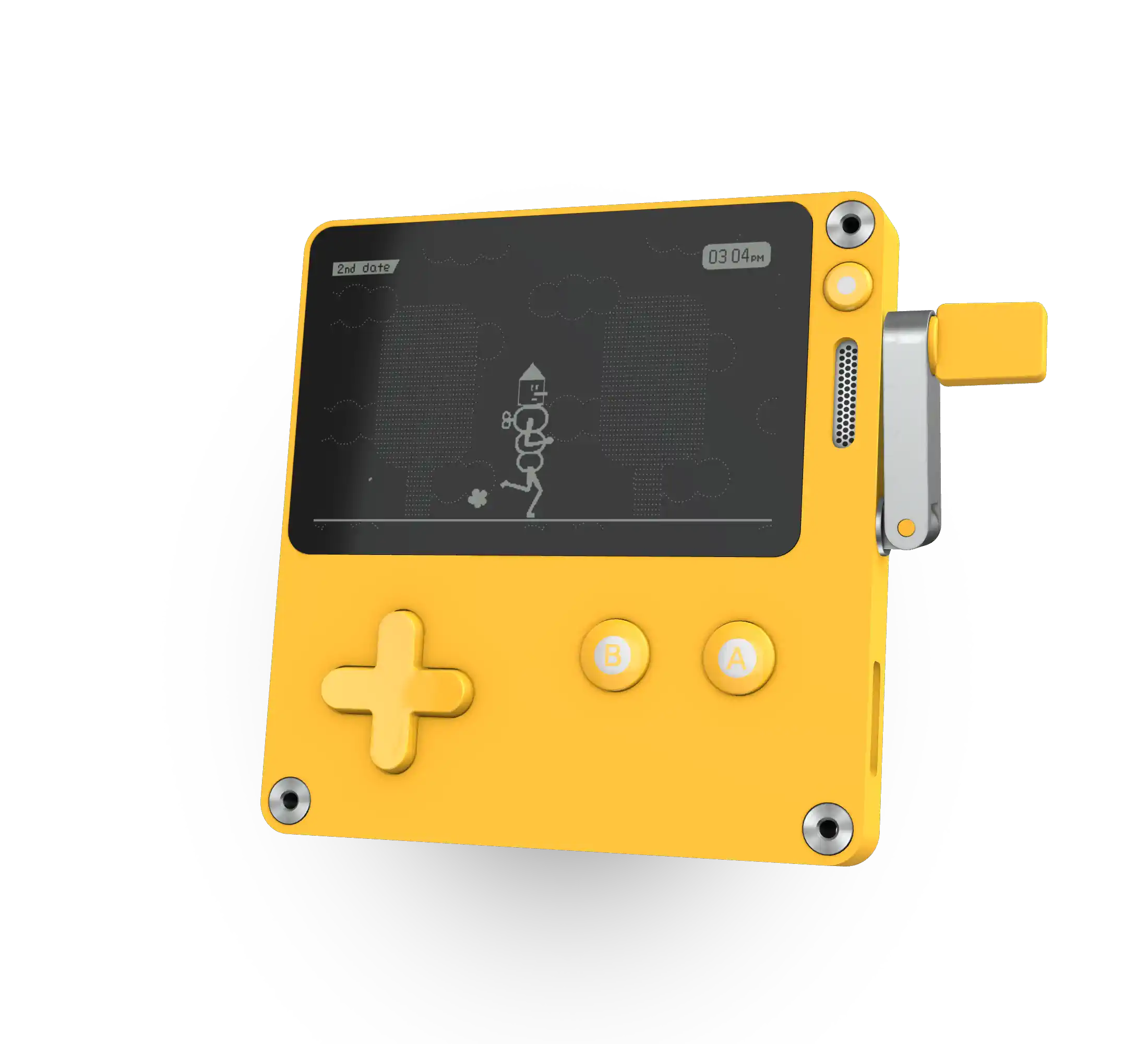
I was reflecting on how my attention span is shrinking, especially after hitting 30s. Of course, it’s also due to the proliferation of short-form video content but still, the fact remains that I wish to increase my deep work hours.
So I thought why not play around with their SDK and build something? Let the hacking begin!
Requirements
I want to open an app and get into focus mode. It should work for me before anyone else!
- I don’t want a forced break in between. Pomodoro worked for me years back but now it doesn’t.
- It should be minimal. It should not compete for attention. Getting out of the way is a success metric.
- Aim to hit 5 hours of deep work a day.
Design Decisions
- No menu or options. Everything is highly opinionated.
- App doesn’t let you start a session on weekends.
- Play some white noise to get into the zone.
With the above in place, I iterated a few times (56 builds to be exact!) and got to a point where I can use the app myself.
The Sequential Session Ladder
You cannot jump cold into 60 minutes of deep focus. The app acts as a warm-up sequence across 8 distinct ranks:
| Rank | State Name | Cost to Enter | Cumulative Work Time |
|---|---|---|---|
| F | Newbie | Start state | 0 min |
| E | Apprentice | 5 min | 5 min |
| D | Practitioner | 10 min | 15 min |
| C | Professional | 15 min | 30 min |
| B | Expert | 30 min | 60 min (1 hr) |
| A | Master | 60 min | 120 min (2 hr) |
| S | Elite | 60 min | 180 min (3 hr) |
| SS | Champion | 60 min | 240 min (4 hr) |
| SSS | Legend | 60 min | 300 min (5 hr) |
Once a session ends, the app automatically transitions to the next title card and begins the next rank. You don’t need to manually click to advance.
Custom Ambient Sounds
At first, I spent some time exploring the SDK and found out that I can generate white noise using the synth oscillator (snd.synth.new(snd.kWaveNoise)). But even after trying out multiple variations, that didn’t sound very good. So I decided to use actual audio recordings instead.
I went to freesound.org and listened to 100+ samples. Out of that, I hand-picked 11 samples. Each file was around 20-50 MB. This made the app pretty heavy at 365 MB! The official SDK recommends keeping the app size under 40MB. I ended up with a 3 MB footprint at the end. Let’s see how:
- Kept 3 sounds: ocean waves, rain & thunder, forest birds + played them all together.
- To make it sound organic, I varied the start offsets, pitch and volume for each track. This prevented the sound from being monotonous. Result: a unique noisescape profile each time!
- Normalized all files so one does not overpower the other.
- Added a sine waveform for periodic volume breathing to prevent static/monotonous looping textures.
- Transcoded them to MP3 at 48kbps mono @ 22.05kHz (Playdate’s hardware features a single built-in mono speaker and 16-bit audio output, making 48k mono @ 22kHz sound virtually identical to the original files)
Hardware Speaker Volume Maximization
- Digital Headroom & RMS (Root Mean Square) Peak Boosting: Audio tracks initially had low digital peak headroom (~10% to 30% of max 32767 digital limit), resulting in quiet playback on the physical Playdate mono speaker:
- Ocean Waves (Original): Peak = 3,461 (9.9% headroom), RMS = 349.5
- Rain & Thunder (Original): Peak = 10,451 (31.7% headroom), RMS = 264.4
- Forest Birds (Original): Peak = 8,252 (15.5% headroom), RMS = 279.3
- FFmpeg Peak Maximization: Peak-normalized all 3 MP3 files to ~90% digital headroom (~30,000 peak amplitude) without clipping distortion.
- Ocean Waves (Maximized): RMS =
3017.7(9x louder digital output) - Rain & Thunder (Maximized): RMS =
747.8(3x louder digital output) - Forest Birds (Maximized): RMS =
995.5(3.5x louder digital output)
- Ocean Waves (Maximized): RMS =
- Software Gain & Layer Weights: Raised default
masterVolumeto 1.0 (100%) and increased layer weight ranges to0.55–0.95.
I’m happy with the current version. Works as intended!
You can try it out here: https://swapagarwal.itch.io/today